
How AI Website Builders Fit into No-Code Workflows?
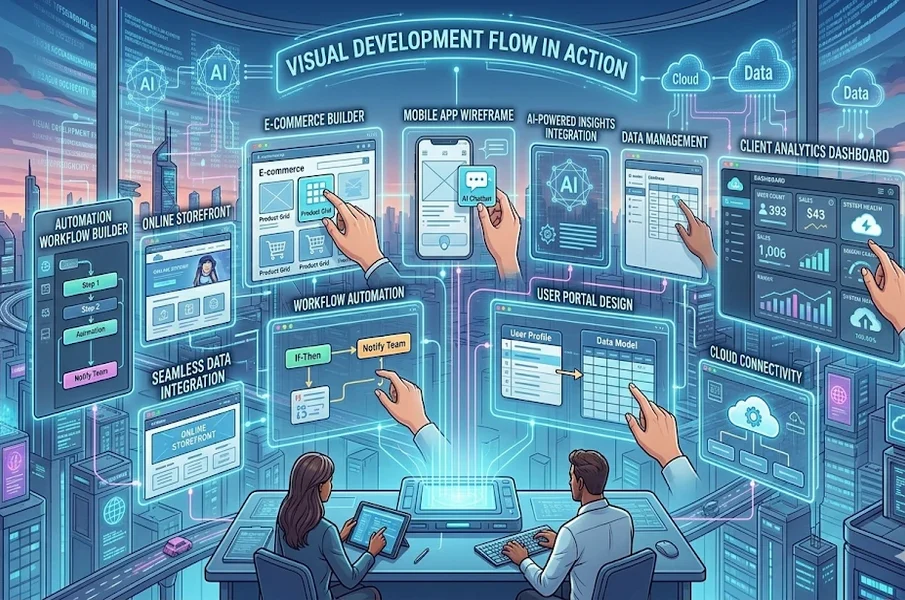
Building a website and automating a workflow used to be two different jobs, handled by two different tools. Not anymore. AI website builders now function as another automation layer, one that builds the storefront instead of just connecting it to something else. This shift matters for anyone comparing the leading no-code builders in web hosting space today, since the category has quietly expanded to include design tools that used to exist separately from it.
A workflow that once needed a developer to launch a page now runs almost entirely through prompts and templates. For retailers weighing the best ecommerce website builder in India has to offer, this convergence changes what “no-code” actually covers, pulling website creation into the same conversation as workflow automation.
Website Builders in the No-Code Picture
No-code once meant connecting existing apps: a form here, a spreadsheet there, an email sent automatically when something changed. Website builders sat outside that definition, treated as a separate category with its own tools and its learning curve.
AI changed that boundary. A modern website builder generates a page, then hands it a role inside a larger workflow, feeding form data into a CRM or triggering an email sequence the moment someone submits an order. The website stops being a standalone project and becomes one more connected piece inside a larger system.
This shift didn’t happen overnight. Hosting providers spent the last two years quietly folding design tools into their existing platforms, closing a gap that used to require three or four separate subscriptions to bridge.
Why This Convergence Works
Automation tools move data between systems that already exist. Website builders now generate the systems those tools connect to in the first place. Together, a small business can launch a page and connect it to existing workflows within a single day, without switching platforms or hiring separate specialists for each part of the process.
Hosting providers noticed this shift early and started building around it. MilesWeb bundles an AI-powered website builder directly into its hosting plans, so a business gets design tools and server infrastructure from one place instead of piecing together a developer, a separate host, and a standalone builder subscription.
What This Means For Small Retailers
Online stores benefit most from this shift, since e-commerce depends on several connected components working correctly at the same time, not just a page that looks appealing.
- A product page needs to sync with inventory tracking in real time.
- Order confirmations need to trigger automatically without manual entry.
- Customer data needs to flow into a CRM without a separate export step.
- Payment records need to reach accounting tools without duplicate work.
AI builders excel at independently managing the storefront generation aspect. The connections around that storefront still rely on automation tools doing what they’ve always done, moving information from one place to another without a person copying it manually.
Where the Limits Still Show
AI builders handle standard layouts and common business needs without much friction. Highly specific functionality, custom checkout logic, or unusual integrations still need manual development in most cases, regardless of how advanced the builder claims to be.
Automation platforms carry a similar limit of their own. Rule-based workflows handle predictable tasks reliably but struggle once a decision requires judgment rather than a fixed condition. Combining both tools narrows this gap considerably, though it doesn’t remove it completely. A retailer operating a simple catalog typically does not encounter this limit. One running a complex subscription model with custom pricing tiers usually hits that limit within the first few months.
Choosing Tools That Work Together
Picking a website builder and an automation platform separately often creates gaps between the two once a workflow needs both to communicate with each other. Checking for native integrations before committing to either tool saves a fair amount of rework later, especially once a store starts scaling into higher order volumes.
A retailer setting up a store needs more than a page that looks finished. Free professional email accounts and daily backups matter just as much once real customers and real orders start coming in, since a lost order or a bounced email costs more than a missed design detail ever would.
Concluding Insights
AI website builders and no-code automation tools have started functioning as one connected system rather than two unrelated categories competing for the same budget. A business owner no longer needs to treat the website as a separate project from the workflows running behind it, since both now live inside the same toolkit. Retailers exploring e-commerce options have access to tools that once required a developer, a designer, and an automation specialist working across three different platforms simultaneously.
MilesWeb captures this shift well, pairing its AI-powered website builder with dependable hosting so retailers get design, infrastructure, and support without juggling separate vendors. That convergence puts a working online store within reach for far more small businesses than it did even two years ago, and the gap between idea and launch keeps shrinking as these tools continue to work better together.


